Your biggest safety risk? The incidents nobody reports
It looked like just another near miss. A contractor walked behind a reversing forklift in a busy warehouse aisle. No one was injured. No equipment was damaged. The forklift driver didn’t notice, the floor manager didn’t see it, and nothing was reported.
But a week later, in the same aisle, a worker was struck by a reversing forklift while loading pallets. This time, the incident resulted in serious injuries, a full investigation, and long-lasting consequences for the business.
It’s a story that’s all too familiar — an unreported incident that could have served as a warning sign. When red flags go unnoticed, the result can be operational disruption, legal exposure, and harm to people and reputation.
The question is no longer “Why is incident reporting important?” but “How do we make it faster, easier, and more reliable?” And increasingly, the answer lies in AI-powered safety management.
What is incident management and why does it matter?
Incident management is the process of reporting, investigating, and resolving workplace incidents, including injuries, near misses, hazards, and property damage. It’s a core part of any organisation’s health and safety obligations and plays a vital role in preventing future incidents.
What are the biggest incident management challenges
While many businesses have incident management systems in place, they often face common challenges:
- Incidents not being reported due to fear of blame or punishment
- Delayed reporting due to manual or outdated processes
- Inconsistent and inaccurate incident data to help investigations
- Lack of visibility into incident trends or root causes across different sites
- Administrative burden on safety professionals
These gaps reduce the effectiveness of incident management processes and leave organisations exposed to risk.
How AI is revolutionising workplace incident management
AI brings a new level of intelligence to incident management by automating the detection of safety issues, and capturing accurate data for reporting, and analysis, allowing WHS professionals to move from a reactive to a proactive approach.
At Rapid Global, we’re leading this shift with several key innovations:
- ** AI-powered image detection**
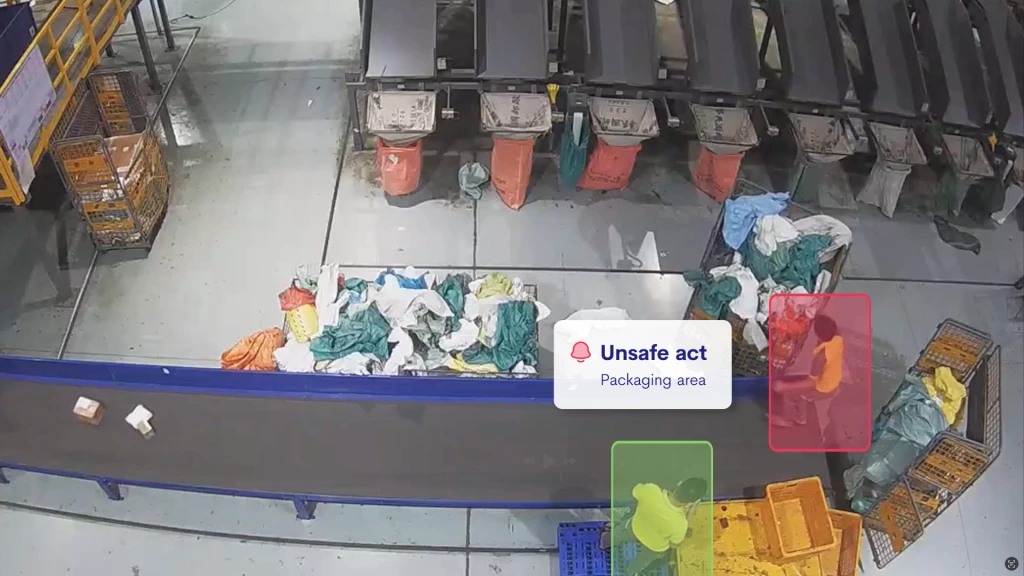
Using computer vision, Rapid Monitor will soon enable organisations to detect safety incidents directly from CCTV footage. For example, the system can automatically identify when a person enters a restricted zone, fails to wear PPE, or has fallen on the ground.
This real-time detection reduces the reliance on human reporting and ensures that critical events don’t go unnoticed, even when no one is watching.
- ** Intelligent incident trend analysis**
AI search capabilities allow safety teams to scan large volumes of incident data to uncover hidden patterns. This can include identifying frequently affected locations, recurring hazards, or specific job roles at higher risk.
By understanding these trends, WHS professionals can take targeted, preventative action to reduce incidents before they occur.
- ** Smart reporting and mobile-first tools**
Rapid Global’s mobile-enabled solutions let workers report incidents or hazards instantly via QR code or a secure link. AI can then help categorise, validate, and prioritise these reports, so safety teams can respond faster and more effectively.
Benefits of AI-powered incident management systems
✅ Faster reporting: Workers can report incidents in real time, with AI assisting in routing and analysing reports immediately. ✅ Better data quality: Automated validation ensures more accurate, consistent, and complete reports. ✅ Proactive safety: AI helps you move from simply reacting to incidents to predicting and preventing them. ✅ Reduced admin burden: Automation reduces time spent on manual data entry, follow-ups, and compliance checks. ✅ Improved compliance: Detailed records and analytics support better regulatory compliance and audit readiness.
How WHS professionals can future-proof their safety systems
If you’re still relying on outdated, manual processes for incident reporting, now is the time to modernise. AI doesn’t replace the role of safety managers; it enhances it, giving you more visibility, control, and insight into what’s really happening across your workforce.
Here’s what to look for in a future-ready incident management platform:
- Seamless integration with your existing WHS and contractor systems
- Mobile reporting with real-time alerts
- AI-powered incident detection and reporting tools
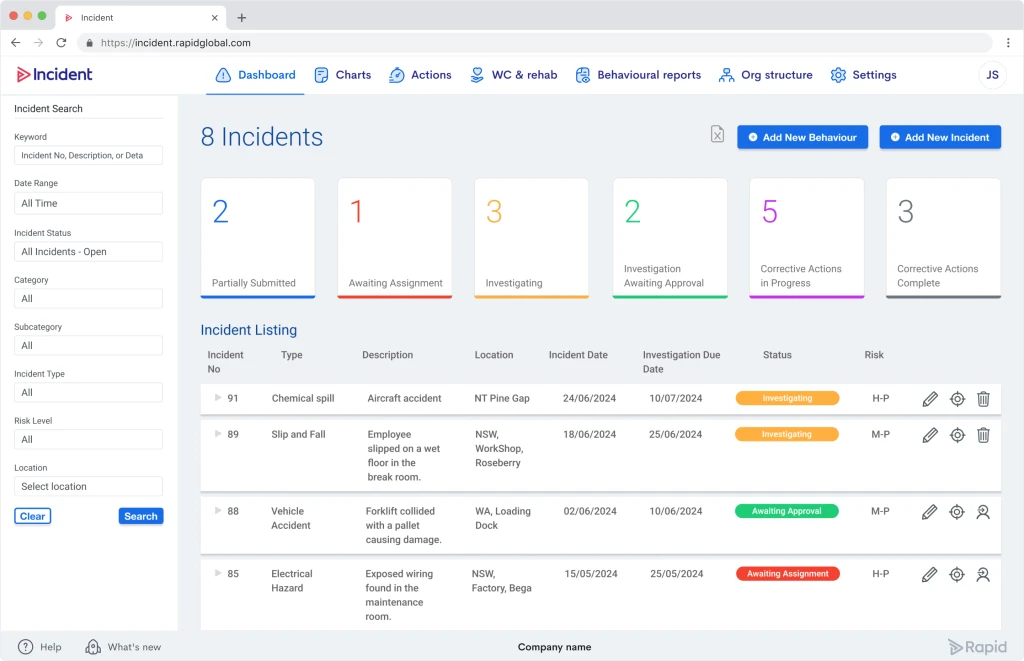
- Customisable workflows for investigations and corrective actions
- Easy-to-read dashboards and exportable analytics for leadership reporting
Incident management is just the beginning
At Rapid Global, we offer more than just incident reporting. Our connected WHS software ecosystem helps organisations manage inductions, contractors, assets, audits, access control and compliance — all in one platform.
Whether you’re in construction, manufacturing, logistics, aged care, facilities management or higher education, our AI-powered tools are designed to simplify your processes, reduce risk, and help create a safer workplace.
Download the free guide or chat to our team
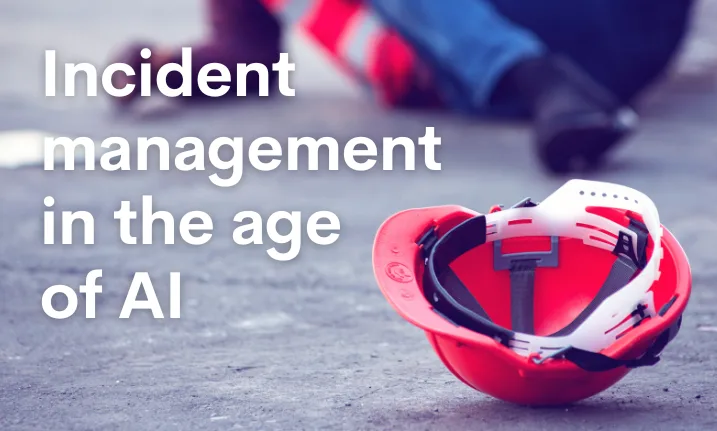
Download our guide: “Incident Management in the AI Age”
Want to see it in action? Request a call from our team to book a free demo and learn how Rapid Global’s Safety Management Software can work for you.
Subscribe to the monthly newsletter to receive the latest work health and safety information straight to your inbox.