The recently enacted changes to NSW’s WHS and industrial relations laws will have wide-reaching day-to-day impacts for businesses. These changes introduce greater legal exposure, stricter compliance expectations, increased union involvement, and heightened reporting obligations.** **
As a result, businesses, especially PCBUs (persons conducting a business or undertaking) will need to sharpen their operational processes and strengthen safety governance to avoid penalties and reputational damage.
Below is a breakdown of how these changes may affect businesses in practice, and how Rapid’s all-in-one WHS software can help organisations respond effectively.
The information contained in this blog is for general informational purposes only and does not constitute legal advice. We recommend consulting with a qualified legal practitioner to understand the laws in more detail.
* *
Mandatory compliance with Codes of Practice
Businesses can no longer treat Codes of Practice as simply guidelines. They are now legally binding, enforceable standards. Luckily, Rapid can help you enforce them across all of your sites.
Structured audit processes
Audits aligned with relevant codes (e.g. working at heights, hazardous manual tasks) can be scheduled regularly to ensure compliance. This also provides a digital record of completed audits for accountability. It’s worth reviewing your codes of practice and making sure that these are part of your audits.
Verified contractors
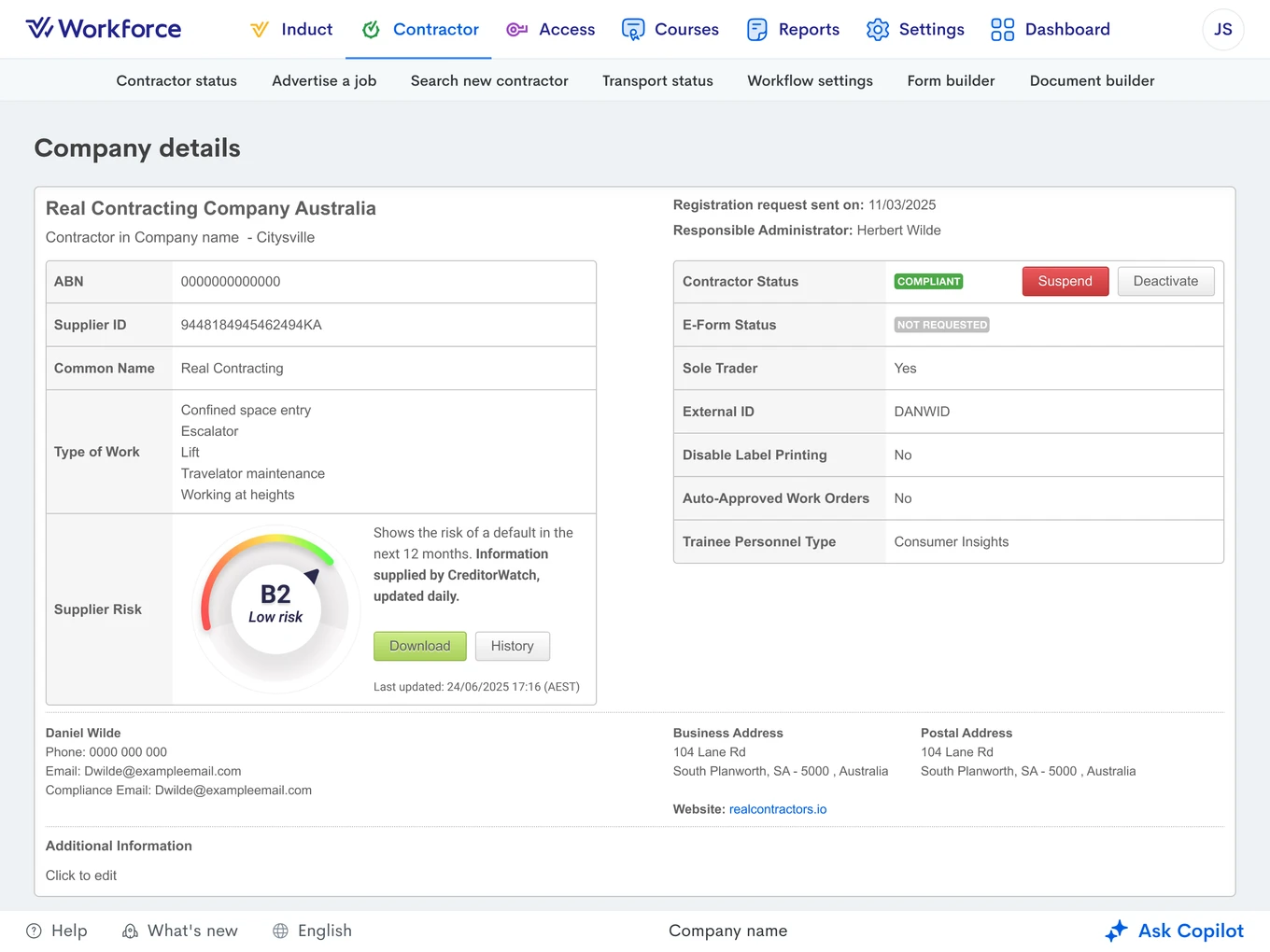
With Rapid Contractor Management you can ensure only contractors with valid licences, documents, and training are approved. The system also verifies essential company documentation including insurances and certifications. With Rapid Access, you can automatically deny access to site if compliance lapses.
Up-to-date training
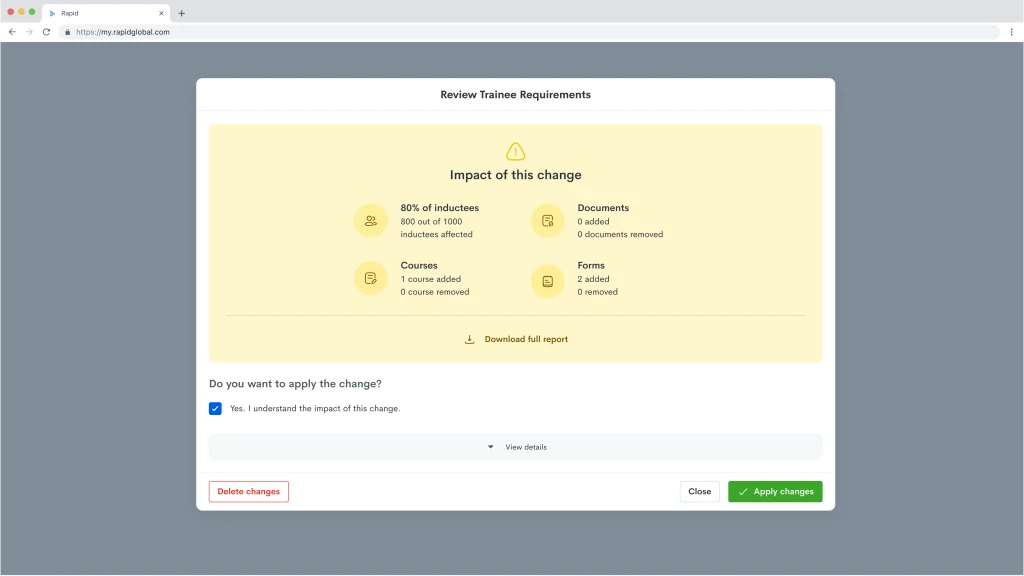
Training and inductions need to reflect the latest codes, but this does not have to be a time-consuming task. With Rapid Induct, you can adjust your content when Codes of Practice change, to deliver consistent, code-aligned training modules to all workers. This is made easy with Trainee Requirements Dry Run – a version control feature that creates a draft when you add or change requirements. It shows a clear summary of changes before they are applied, including how many people are affected, and the number of documents, courses, or forms added or removed.
High-risk work authorisation
Many Codes of Practice apply specifically to high-risk tasks (e.g. confined spaces, hot work, working at heights). Rapid’s Permit To Work helps enforce these codes by linking permits to the relevant Code of Practice for that task type, ensuring only trained, authorised personnel are approved to carry out the work. You also get a digital trail of issued permits, approvals, and expiry times.
Real-time hazard detection
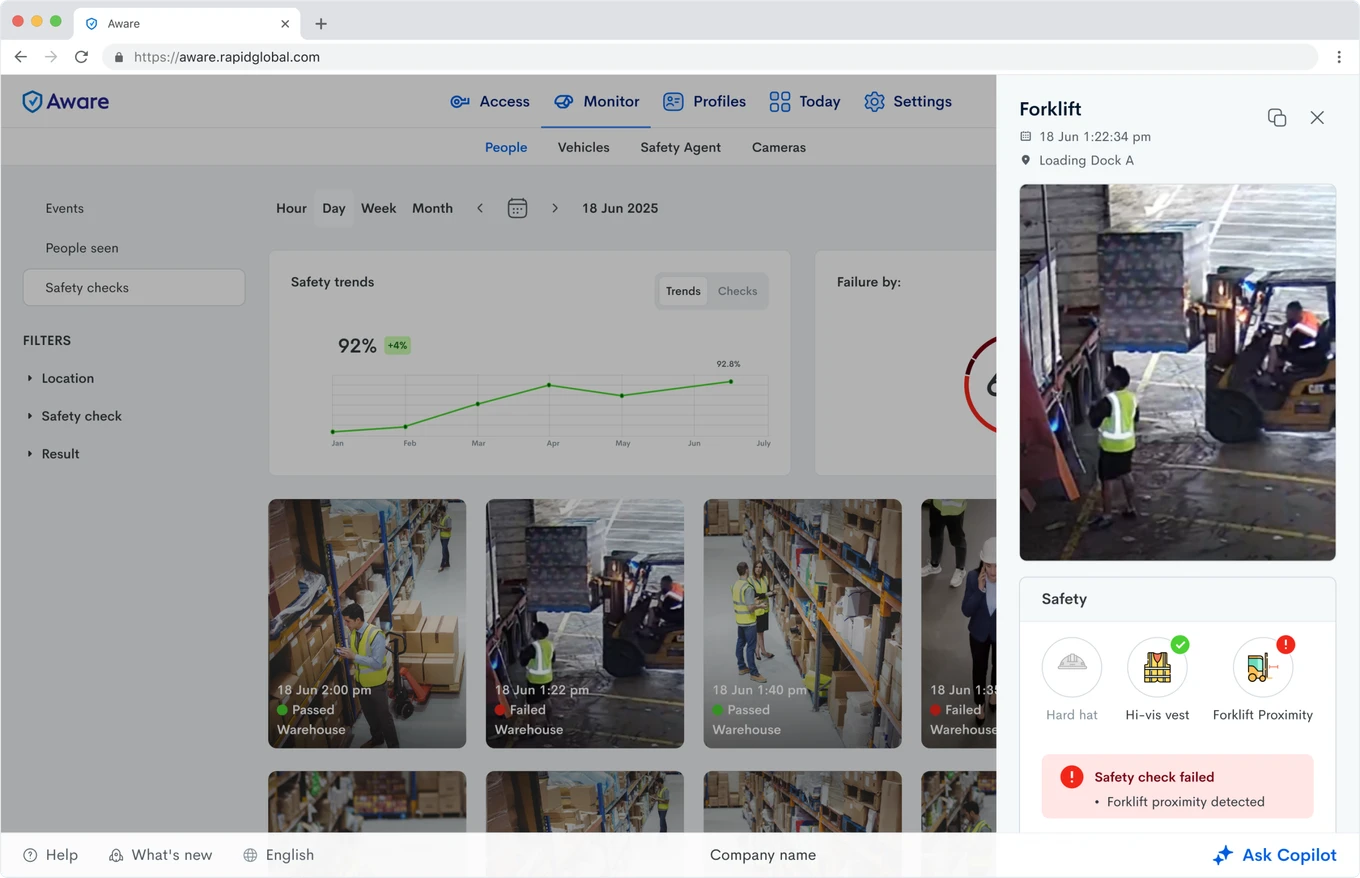
Many Codes of Practice can be enforced with AI-powered camera monitoring. Rapid Monitor can help detect PPE breaches (e.g. missing hard hats or vests) and alert managers in real time to unsafe interactions (e.g. near misses between pedestrians and forklifts) or for man-down events. Capturing visual evidence to support investigations means you can be proactive in identifying and correcting code of practice issues early.
WHS Dispute Resolution & IRC involvement
Disputes over WHS matters such as Health & Safety Representative (HSR) training, committee setup, or unsafe work refusals, can now escalate more easily to the NSW Industrial Relations Committee, creating legal risk and productivity disruptions.
Transparent training records
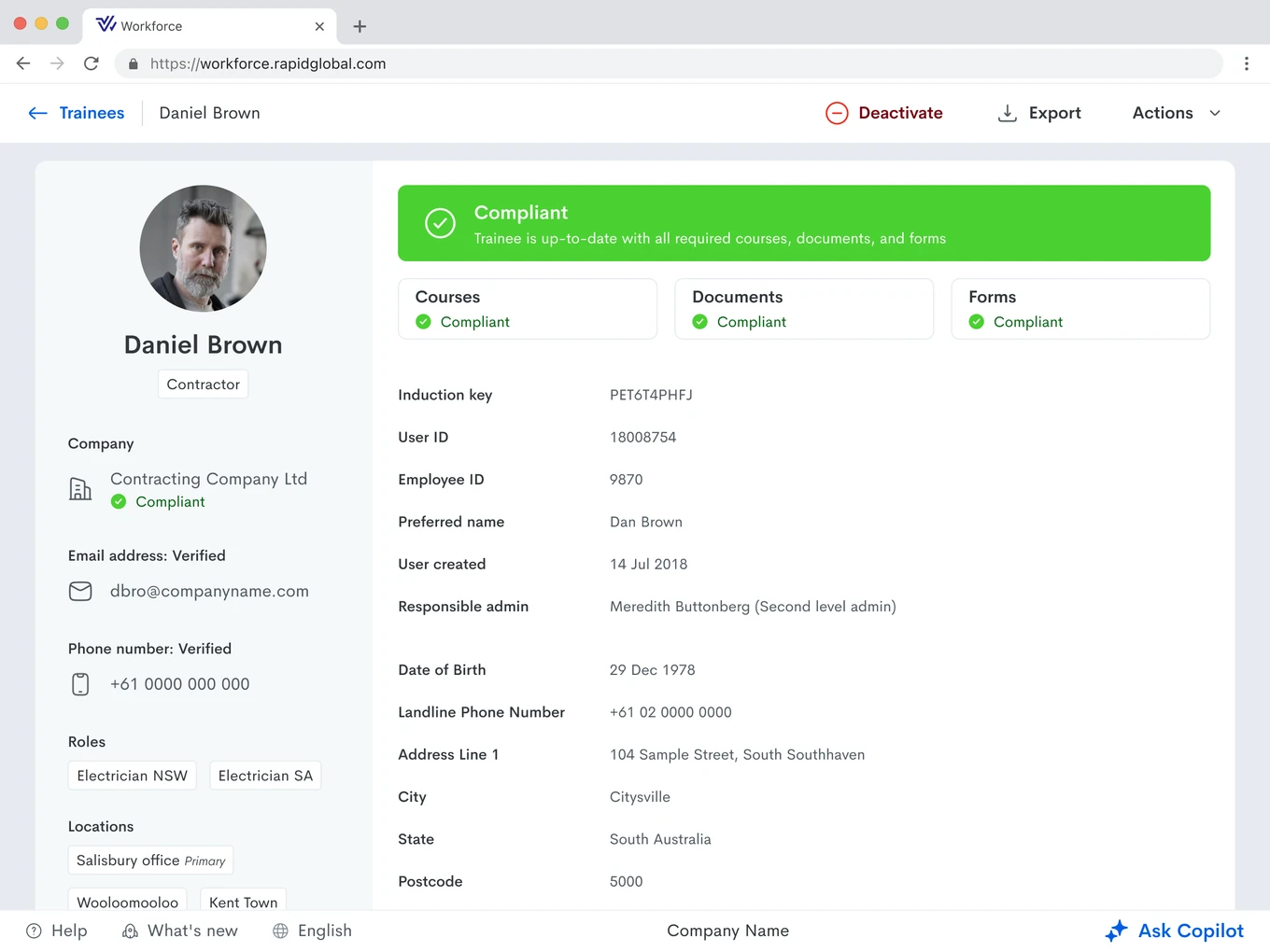
Software like Rapid Induct ensures that all training, including HSR training, is clearly logged, up to date, and easily reportable. If there is a dispute, digital records act as your defence to show timelines of training and communication logs.
Timely communication
A digital record of communication about HSR training makes things easier to manage, while reminders for refresher courses ensure ongoing compliance. The system clearly highlights any non-compliant training status, allowing managers to quickly identify and address gaps.
Documented procedures and policies
Storing documents and licences via Rapid ensures everyone, including HSRs, know their entitlements, reducing confusion that often sparks disputes.
Incident follow up
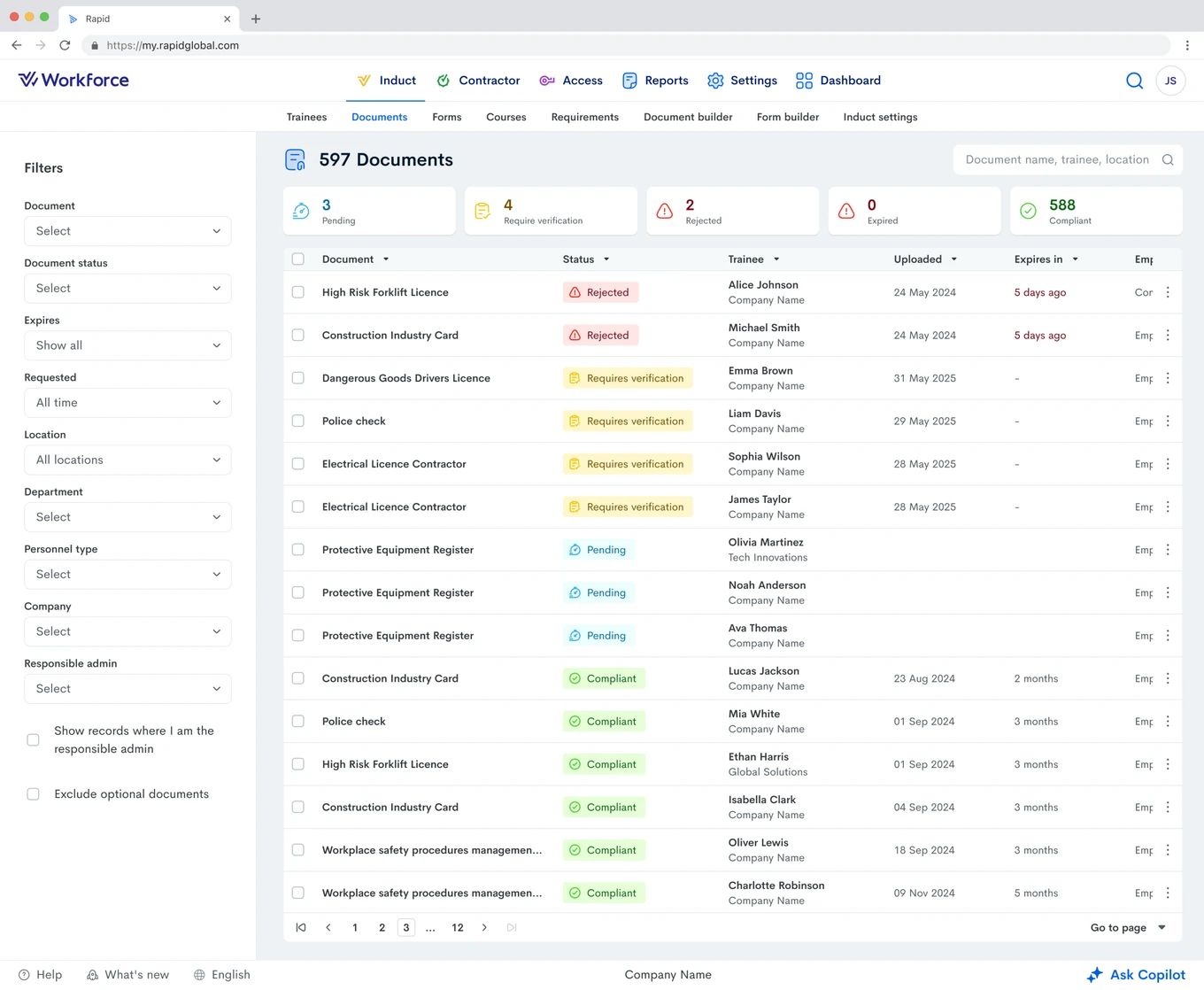
If a dispute is sparked by a workplace safety concern, Rapid Incident Reporting can show how concerns were reported and addressed and prove that investigations occurred and corrective actions were assigned and completed.
Expanded union entry rights (photos, tests, evidence collection)
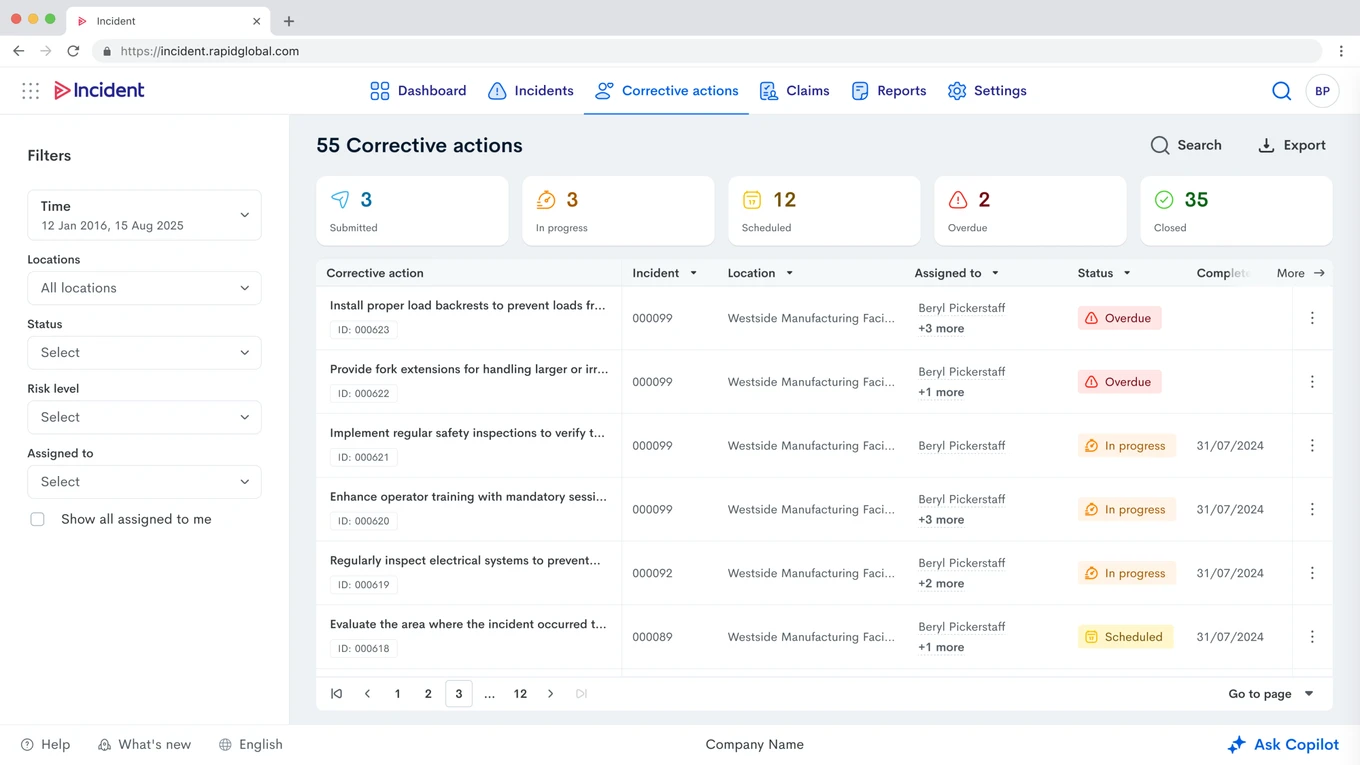
Entry permit holders, such as Union officials, can now collect evidence themselves and document non-compliance, which can trigger investigations by SafeWork NSW, and legal proceedings. Even small oversights like incomplete inductions, outdated training records, or missing signage, can be documented and escalated. Having a single source of safety truth, such as with Rapid, can prevent non-compliance.
Visible commitment to safety
A WHS system like Rapid demonstrates to permit holders that your business takes compliance seriously. Physical features like a check-in kiosk, and QR codes to report incidents make it clear that safety isn’t just on paper, it’s actively enforced.

Comprehensive record keeping
Rapid keeps everything in one place, from compliance documents and incident logs to audit results. This provides officials with evidence that all work personnel are inducted and up to date with their courses and documents. This makes it easy to show real-time proof of compliance and rapidly respond to any claims or requests for information.
Inductions linked to site access
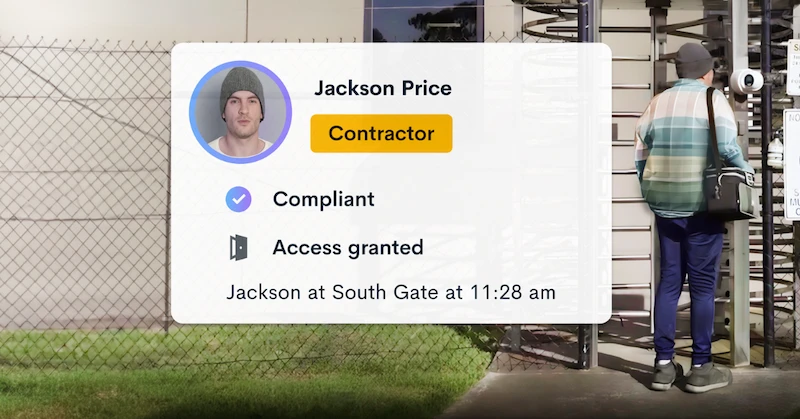
Requiring permit holders to complete a site-specific induction before entering (via solutions like Rapid Induct) can help establish clear expectations and show that your business treats all site visitors, union or otherwise, equally and professionally. Integrating Rapid Access with access control goes a step further ensuring only authorised and compliant personnel can make it onsite.
Quick access to evidence
Solutions like Rapid Access (for secure sign-in) and Incident Reporting help you create a strong digital trail. If challenged, you can provide timestamped access logs, verified contractor credentials, and corrective actions taken from past incidents.
PIN reporting requirements to SafeWork NSW
Health and Safety Representative (HSR) issued Provisional Improvement Notices (PINs) must be reported promptly to SafeWork NSW. Failure to do so risks fines and regulatory scrutiny.
With a solution like Rapid in place, hopefully you never receive a PIN. But if you do, this is where Rapid can help.
Centralised PIN logging
If issued a PIN, an incident can be created within Rapid Incident Reporting to formally log the issue, assign it for investigation and track corrective actions. This ensures no PINs go undocumented or overlooked and that action is taken.
Automated notifications
When an incident is created for a PIN, Rapid can trigger alerts to key personnel (e.g. Safety Managers, HR) along with reminders if actions don’t meet their due dates.
Audit trails
Creating an incident for a PIN means you can see when the PIN was received, actions taken, communications logged, and when SafeWork NSW was notified, helping prove due diligence.
Linked corrective actions
Assign and track corrective actions directly from the PIN entry to ensure issues are addressed quickly and transparently. This can demonstrate a strong, proactive safety culture if regulators inspect your process.
Longer limitation periods and union prosecutions
Businesses may face retrospective legal action beyond the typical two-year limit, especially where unions step in to prosecute. With extended limitation periods and the ability for unions to initiate prosecutions, businesses may now face legal consequences for safety breaches years after the fact. This raises major risks, especially if records are incomplete, lost, or poorly organised. In contrast, digital records can be easier to manage.
Secure long-term record keeping
Cloud-based WHS platforms like Rapid can preserve key safety documentation, ensuring training records, incident reports, risk assessments, and communications are available years later if required for legal defence.
Tamper-proof audit trails
Time-stamped records create a digital trail showing what action was taken, when, and by whom. This helps demonstrate due diligence if historical compliance is challenged in court or by unions.
Centralised document management
All safety policies, procedures, inspection checklists, and corrective actions can be stored in one system, making it easy to retrieve the right information, fast.
Linked evidence
When combined with other Rapid solutions (e.g. Rapid Monitor camera footage, contractor data, or training logs), you have context across various types of evidence, bolstering your position in a dispute or legal matter.
Consistent implementation of standards
Enforcing safe work practices consistently across teams and sites—via digital procedures, reminders, and checklists—reduces the chance of non-compliance in the first place, limiting future exposure.
Increased focus on psychosocial risks
With a growing regulatory focus on psychosocial hazards like bullying, fatigue, and stress, employers are now expected to identify, control, and monitor these risks just as they would physical ones. Failing to do so may lead to regulatory action or legal claims. Extending to public sector workers and those not previously covered under federal law, employers must also demonstrate they’re actively preventing and managing bullying, sexual harassment, and victimisation.
Confidential incident reporting
With Rapid Incident Reporting, anyone onsite can report an incident anonymously. This provides workers with a safe, digital channel to report bullying, harassment, or mental health concerns. This can lead to earlier reporting, helping you act before issues escalate.
Formal investigations and follow-up
Ensure incidents are formally investigated and outcomes documented. Digital workflows allow assigning responsibility, tracking deadlines, and storing actions taken. This reduces the risk of mishandled complaints and creates a verifiable record if scrutiny arises.
Policy communication and training
Deliver mental health and respectful workplace training through Rapid Induct to set expectations around conduct and wellbeing from the start. Include refresher courses to maintain awareness of your policies.
Data-driven insights
Easily spot trends in absenteeism or people working overtime with Rapid Access insights. In addition, Rapid Monitor can help identify fatigue-related incidents or provide evidence for investigations.
Increase in small claims threshold
Employees can now pursue claims up to $100,000 via small claims which is a significant rise from $10,000. The small claims process is cheaper, faster, and less formal than traditional court processes, raising financial exposure for businesses.
Claims to watch out for include unpaid wages or entitlements (e.g. overtime, leave, notice periods), or costs tied to breaches of WHS duties or claims linked to workplace bullying or stress (especially if tied to financial loss). This is where Rapid can help:
Tracking attendance
Rapid Access helps protect against wage-related claims by providing reliable, digital attendance records. Employees sign in via an iPad kiosk with facial recognition, ensuring accurate verification of who was onsite and when. The system automatically calculates total hours worked, including breaks, creating a clear, auditable timesheet. With seamless integrations to payroll systems like Employment Hero and MYOB, Rapid simplifies wage calculations and helps ensure employees are paid correctly, minimising the risk of disputes over hours or entitlements.
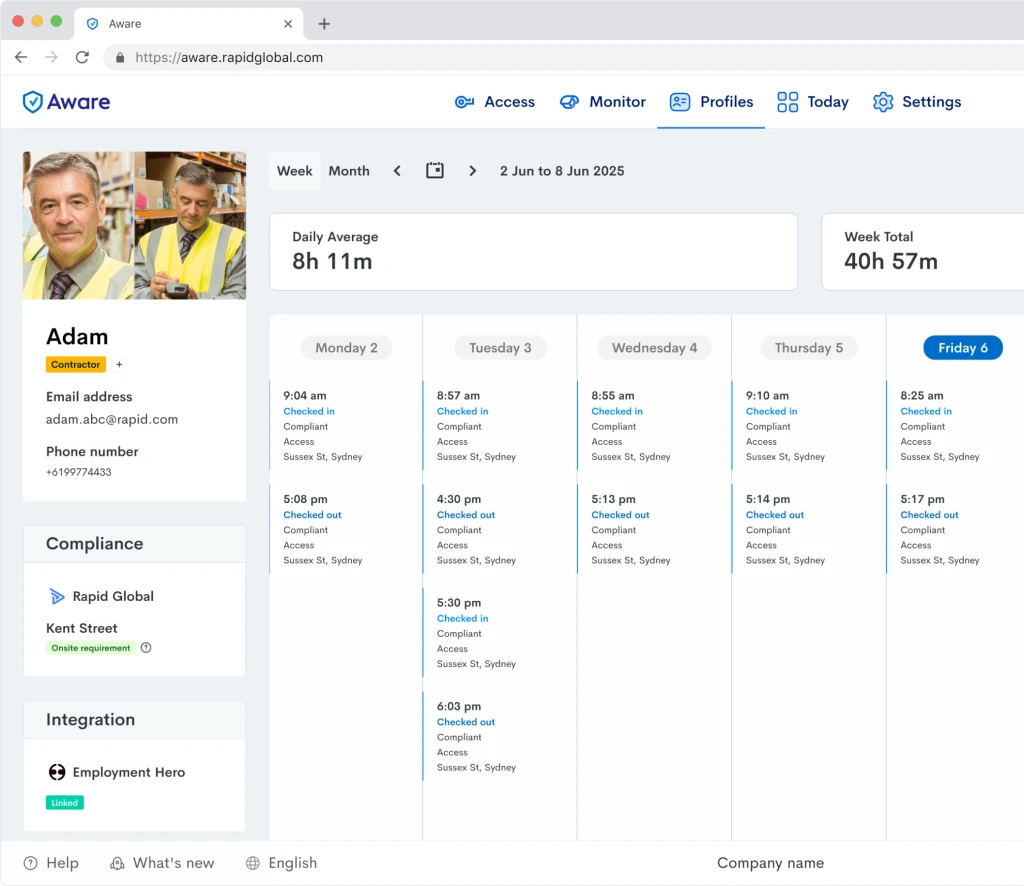
Minimising the risk of claims
With time-stamped records of training completed, policies acknowledged, and hours worked, Rapid equips employers with a strong defence against claims related to underpayment or procedural failures.
Need help navigating the changes?
The upcoming changes to the Work Health and Safety Act from July 1, 2025, mark a significant shift in employer obligations, and the risks of non-compliance are higher than ever.
Now is the time to review your WHS processes and systems. Whether it’s digitising training records, improving visibility across safety committees, or automating incident tracking and permit management, WHS software like Rapid can give you the confidence and clarity needed to meet your obligations and protect your people. To learn more, talk to our experts today.
Subscribe to the monthly newsletter to receive the latest work health and safety information straight to your inbox.